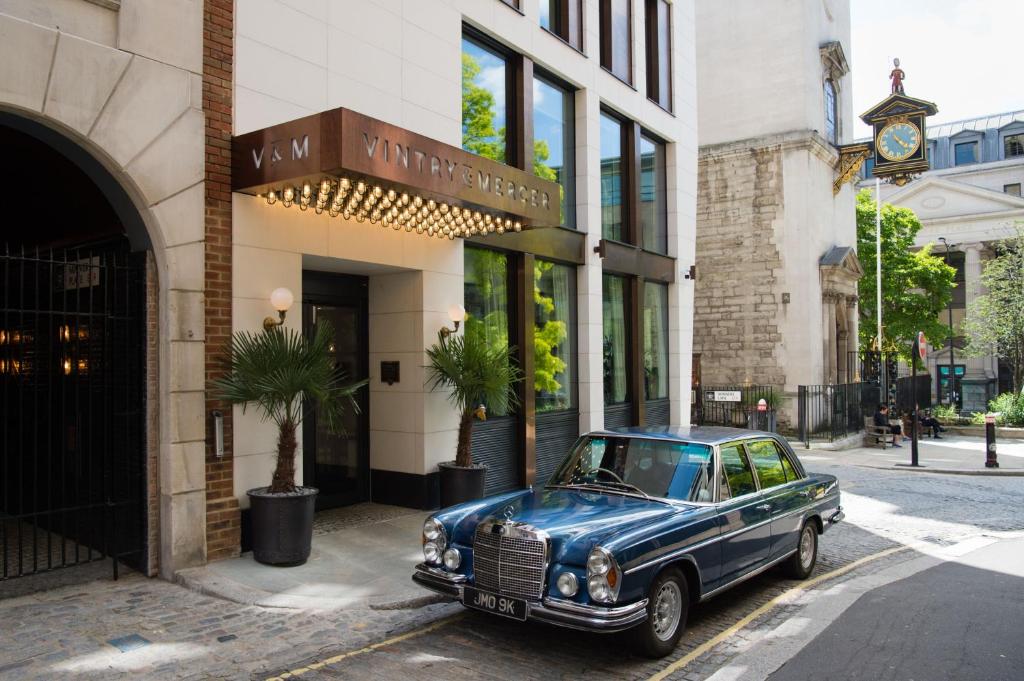
Vintry & Mercer Luxury Hotel In The City Of London
Challenge
Vintry & Mercer, a luxury hotel in the City of London, was operating without visibility into how their energy consumption related to actual guest demand and weather conditions. Like many properties in the sector, the hotel had no clear picture of where operational inefficiencies existed or what impact they were having on energy costs.
Solution
Fewton deployed whole-building electricity and gas meter analysis to identify efficiency opportunities and is now implementing targeted measures with ongoing monitoring support.
The approach includes:
Analysis of half-hourly electricity and gas consumption data alongside occupancy and weather patterns, benchmarked against CIBSE values, to establish baseline inefficiencies.
Site visits to gather additional operational data and map energy-saving opportunities with the engineering team.
Direct collaboration with the Chief Engineer to optimize A/C schedules, hot water temperatures and circulation, boiler sequencing, and electrical controls based on occupancy and weather patterns.
Deployment of real-time alerts for anomalies including baseload breaches, unexpected peak loads, and manual override misuse.
Installation of sub-metering on major energy-consuming equipment to enhance monitoring accuracy and validate implemented measures.
Dynamic control integration with existing BMS to link HVAC, heating, cooling, and lighting to occupancy and weather conditions.
Monthly performance reviews tracking measured savings against established baselines to ensure sustained results.
Results
10% electricity and gas savings identified through integrated optimization approach, with Fewton actively managing the implementation of recommendations as an ongoing process.
Key inefficiencies identified:
Gas:
Heating systems fail to adjust effectively to outside temperatures, leading to unnecessary usage during mild conditions.
Gas demand shows patterns independent of occupancy or weather, with catering contributing to baseline load.
Electricity:
A consistent night-time baseload indicates scope to reduce non-essential plant operation.
Cooling and A/C systems and lighting each account for significant shares of consumption, operating at constant loads rather than adapting to occupancy or weather conditions.
A/C heating, catering, and office systems contribute to steady demand across weekdays and weekends.
Regular late-night consumption spikes from automated processes could be shifted or optimized.
